

Last Updated: November 1, 2026
Quick Summary
The 4 cs of diamonds are cut, color, clarity, and carat weight, the four factors gemologists grade to describe a diamond's quality and set its price. They work as one system, so understanding how they trade off is what separates a confident buyer from someone who overpays.
- Cut is the only C that humans control and the most important C for beauty.
- The color scale runs from D, completely colorless, to Z, a noticeable tint.
- Clarity is the most overpaid C because most VS and SI inclusions are invisible without a loupe.
- One carat equals 200 milligrams, and weight does not always mean a bigger-looking stone.
- Shop just under a round carat weight to dodge the steep price jump at magic weights.
Table of Contents
- The 4 Cs of Diamonds Explained in Plain Language
- Diamond Cut Grades Explained: The One C That Controls Sparkle
- Diamond Color Scale: Reading the D-to-Z Grades
- Diamond Clarity Chart: What Inclusions and Blemishes Mean
- Diamond Carat Size Chart: Weight, Face-Up Size, and Budget
- How the 4 Cs Work Together to Set Diamond Value
- Frequently Asked Questions
The 4 Cs of Diamonds Explained in Plain Language
The 4 cs of diamonds are cut, color, clarity, and carat weight, the four factors gemologists grade to describe a diamond's quality and set its price. This guide breaks down each one in plain terms, so you can read a grading report and know exactly what you're buying. They are not four separate scores but one system, and understanding how they trade off is what separates a confident buyer from someone who overpays.
Here is the short version before we go deeper:
- Cut drives sparkle. It is the most important C for beauty.
- Color measures how colorless a stone looks on a D-to-Z scale.
- Clarity grades how many internal flaws and surface marks a stone has.
Diamond Cut Grades Explained: The One C That Controls Sparkle
Cut is the only C that humans control, and it decides whether a diamond looks alive or flat. For round brilliants, the grades run Excellent, Very Good, Good, Fair, and Poor (GIA Diamond Cut Grade: 6 Things to Know).
A well-cut stone sends light back out through the top; a poorly cut one lets light leak out the sides or bottom, so it looks dull even with top-tier color and clarity.
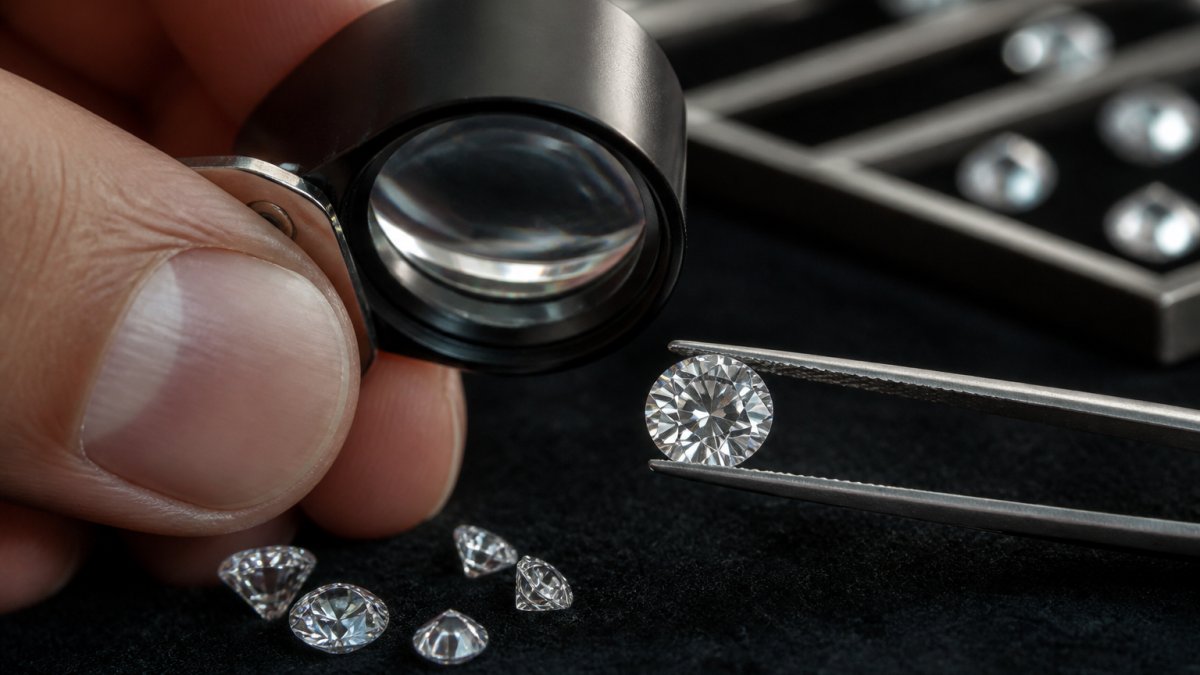
Three light behaviors matter here:
- Brilliance: the bright white light returned to your eye
- Fire: the flashes of color you see as the stone moves
- Scintillation: the sparkle pattern created by movement and light
Cut grade is not the same as shape
This is the most common point of confusion, and most guides skip it. Cut grade describes how well a diamond was fashioned, its proportions, symmetry, and polish. Shape describes its outline: round, oval, cushion, emerald, pear, and so on.
What most guides also miss is that cut grade is not universal across shapes. The Gemological Institute of America's diamond grading scales apply a cut grade to round brilliants on a five-point scale, but many fancy shapes, ovals, pears, cushions, emeralds, are graded differently or not given a cut grade at all.
How to judge cut when the report is silent
When a fancy shape carries no cut grade, fall back on the numbers and your eyes:
- Table percentage: the flat top facet as a share of the stone's width. Very large tables can flatten brilliance; very small tables can hide it.
- Depth percentage: total depth as a share of width. Too deep and light leaks out the bottom; too shallow and it leaks out the sides.
- Symmetry and polish: graded separately on most reports, and both should be Very Good or better.
If sparkle is your priority, shop stones where cut quality leads the decision.
Diamond Color Scale: Reading the D-to-Z Grades
The diamond color scale runs from D, completely colorless, to Z, a noticeable yellow or brown tint.
The trick with color is that most people cannot see the difference between adjacent grades once the stone is set.
So set a floor, not a ceiling. For white metals, G to J is a smart range for most buyers. For yellow gold, you can drop a grade or two lower and never notice.
Diamond Clarity Chart: What Inclusions and Blemishes Mean
A diamond clarity chart grades a stone from Flawless down to Included, based on inclusions (internal flaws) and blemishes (surface marks).
Here is the honest part: clarity is the most overpaid C in the store.
Use this quick reference when you read a report:
| Clarity Grade | What It Means | Visible to Eye? |
|---|---|---|
| FL / IF | No inclusions or tiny surface-only marks | No |
| VVS1 / VVS2 | Tiny inclusions, hard to find under 10x | No |
| VS1 / VS2 | Small inclusions, visible under magnification | Rarely |
| SI1 / SI2 | Noticeable under magnification | Sometimes |
| I1 / I2 / I3 | Obvious inclusions | Yes |
A common mistake is chasing VVS clarity while accepting a weaker cut. Spend on cut first, then take the clarity grade that stays clean to the eye.
3.51ctw Radiant Cut Lab Grown Diamond Solitaire Engagement Ring Platinum, D →
Diamond Carat Size Chart: Weight, Face-Up Size, and Budget
Carat weight is how heavy a diamond is, not how big it looks. One carat equals 200 milligrams (Diamond Carat Weight | Understanding Carat Measurement).
This is the gap most buyers fall into. A deep-cut stone hides weight below the surface, so a 1-carat diamond can face up smaller than a well-proportioned 0.9-carat stone.
| Carat Weight | Approx. Face-Up Diameter (Round) | Budget Note |
|---|---|---|
| 0.50 ct | About 5.1 mm | Entry point, strong value |
| 0.75 ct | About 5.8 mm | Good balance of size and price |
| 1.00 ct | About 6.4 mm | Price jumps at the round number |
| 1.50 ct | About 7.3 mm | Noticeably larger on the hand |
| 2.00 ct | About 8.1 mm | Premium tier |
Prices climb steeply at "magic" weights like exactly 1.00 carat. Before committing, review our financing options.
How the 4 Cs Work Together to Set Diamond Value
No single C sets a diamond's value. Value comes from how the four balance against each other, and the smartest buyers trade strength in one C for savings in another, trade-offs that show up as specific combinations at specific budget points.
Reading a diamond grading report
A grading report is where the 4 Cs become checkable facts. Most reports from the major laboratories list, at minimum:
- Shape and cutting style (round brilliant, oval, emerald, etc.)
- Measurements in millimeters, the face-up dimensions, not just the carat weight
- Carat weight to two decimal places
Read the measurements line before the carat line. Two 1-carat stones can measure 6.2 mm and 6.6 mm across, and the wider one will look meaningfully larger on the hand.
How grading varies between laboratories
Grading is a human judgment, and different laboratories apply their scales with different strictness. A stone graded VS2 by one lab may be graded SI1 by another; a color grade can shift by a step as well.
When you compare two stones, compare reports from the same laboratory first. If the labs differ, treat the grades as approximate and let face-up appearance and measurements break the tie. Ask which laboratory issued the report, and whether the stone comes with the original report rather than a copy.
Practical trade-offs at real budget points
Instead of chasing one "ideal" grade, think in combinations. These are patterns buyers commonly land on, not rules:
- Entry budget: prioritize cut (Very Good or Excellent), accept a near-colorless grade around J, and stay in the SI range. The stone will face up clean and sparkle, and the savings go into the setting.
- Mid budget: Excellent cut, color around G to H, clarity VS2 or SI1, the range where most buyers stop seeing differences with the naked eye.
- Higher budget: Excellent cut, color F to G, clarity VS1 or better. You are paying for report grades more than visible beauty here, buy it because you value the paper, not because you can see the difference.
Why carat weight changes face-up size
Carat is weight, not size. A deep-cut stone hides weight below the surface, so a 1-carat diamond can face up smaller than a well-proportioned 0.9-carat stone. Always compare face-up dimensions in millimeters, not just the carat number on the tag. Prices also climb steeply at "magic" weights like exactly 1.00 carat, so shopping just under a round number often gets you nearly the same look for less.
The order of operations
Here is how we would weigh the trade-offs:
- Cut first, always. Never sacrifice cut for size or clarity. A dull stone wastes every other grade.
- Take color down a step or two in white metal and no one will know.
- Stay in the VS to SI clarity range unless you have a specific reason to go higher.
The result is a stone that looks better than its price tag suggests. That is the whole game.
At Y Sadiq Diamond, our Graduate Gemologist founder has over 35 years of experience, and we offer a zero-pressure consultation covering these trade-offs. We would rather explain why a slightly lower clarity grade saves you money than sell you a grade you cannot see.
Frequently Asked Questions
Which of the 4 Cs matters most when buying a diamond?
Cut matters most for how a diamond looks. A well-cut stone returns light to your eye, so it sparkles even if color or clarity is a grade or two lower. Color and clarity affect appearance too, but a poorly cut diamond can look dull no matter how high the other grades are. Start with cut, then balance color, clarity, and carat weight against your budget.
What is the difference between diamond cut and diamond shape?
Shape is the outline you see, such as round, oval, or radiant. Cut is how well the diamond's facets are proportioned, polished, and aligned to return light. A round brilliant and a radiant cut can both earn a top cut grade. When you compare diamonds, check the cut grade on the report separately from the shape name.
What diamond clarity grade is eye-clean?
Many VS2 and SI1 diamonds are eye-clean, meaning inclusions are not visible to the naked eye. The clarity chart runs from Flawless down to Included. Above about 10 inches, most people cannot see VS2 or SI1 inclusions in a well-cut stone. Ask to view the diamond face-up in normal light, not just under magnification.
Can two diamonds with the same 4 Cs look different?
Yes. Two stones can share the same cut, color, clarity, and carat grades and still look different because of proportions, fluorescence, and the lab that issued the report. Compare grading reports side by side and view both diamonds in person or on video. A Graduate Gemologist can point out differences the grades alone do not capture.
Schedule your private consultation today!
https://ysadiqdiamond.com/pages/contact
The 4 Cs can feel like a lot to hold at once, but they boil down to one question: where do you want your money to show up? We help you answer that with GIA-certified expertise, custom design, and a consultation built around your budget, not ours. Get started with Y Sadiq Diamond and choose a diamond you understand, at a price you can defend.
